

Meditation is about the easiest thing to conceptualize, and the hardest thing to practice. This paradox is suspicious enough to warrant further investigation, and turns out to be a big part of why I keep trying.
If you’re not completely new to this space, maybe you’ve heard the meditative state described as “non-judgmental awareness”. I like that one. It’s concise. Maybe you’ve been directed to “notice what’s arising in consciousness”, “watch your thoughts as they go by”, or “arrive in the present moment”. These and a thousand other phrases are used to talk about an activity that would seem, on paper, to be the simplest thing in the world. Your mind is running the show. Disidentify with thought for a moment. Allow everything to be as it is. Easy, right?
After five years of trying to practice this stuff, in fits and starts and various forms, I’m reporting back. It is not easy. Why not?
By practicing meditation, I don’t mean learning about what meditation is, or searching, however earnestly, for a version of it that clicks. I don’t mean clearing the calendar. I don’t mean the act of sitting down or setting a timer. I don’t mean sitting commendably still for five, twenty, or even sixty minutes. I often to do all of these things and manage not to practice meditation.
Nor do I mean to single out a particular tradition or tactic. I try different things. Sometimes Zen-inspired, tethered to the breath. Or Christian-contemplative, employing a “prayer word”. Maybe a yoga class, tracking with the body. Sometimes I try to meditate while practicing music, walking the neighborhood, or looking out of a window. There’s variety here, but one could loosely group them under receptive mindfulness. They all work for me, and by “work”, I mean they all drop me off at the same place.
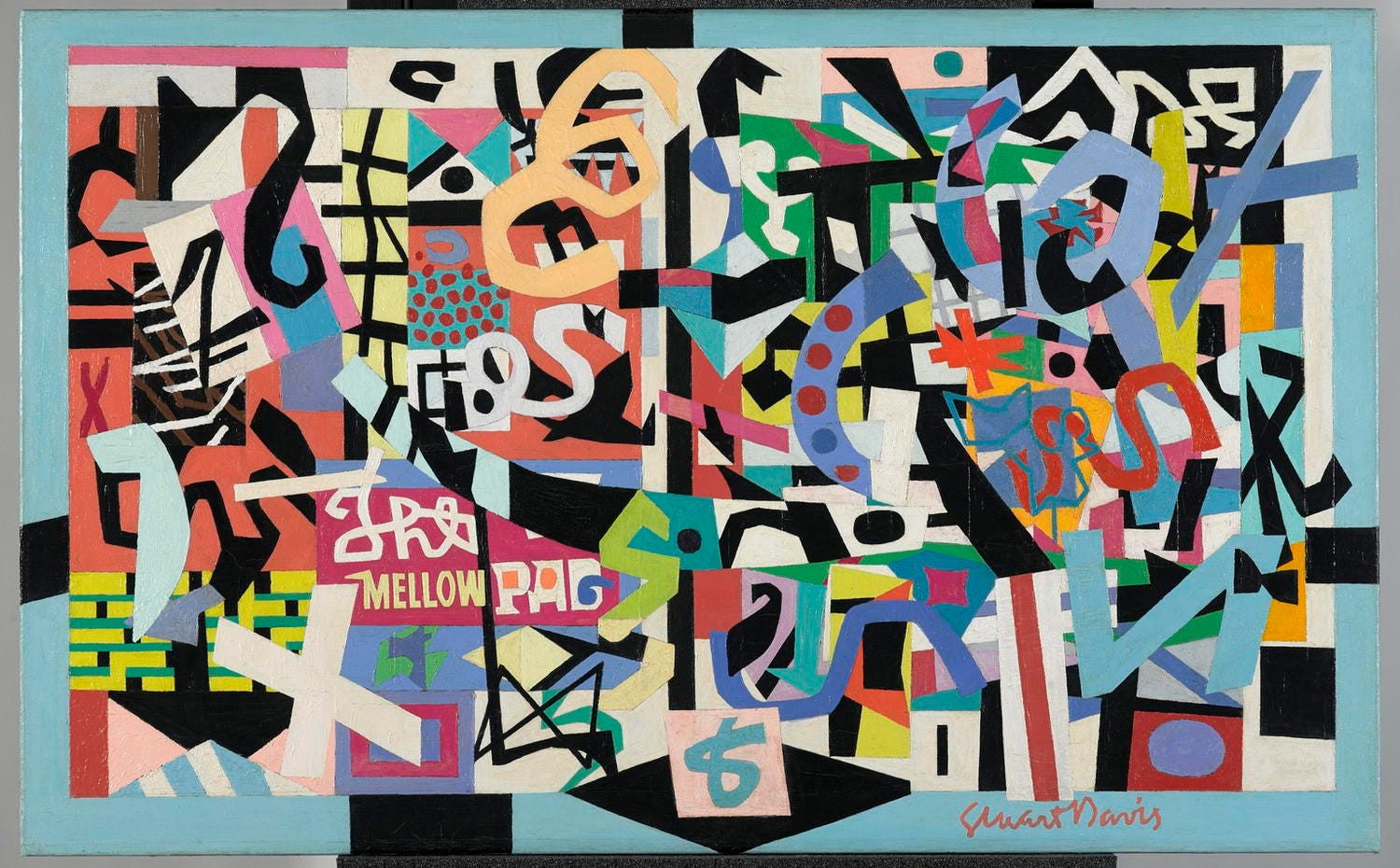
This is a specific place. Sometimes it’s quiet, but mostly not. My mind hates it here. I can never seem to “start clean”, and there’s nothing to achieve. All my problems get louder. Commentary, meta-commentary, infinite regression. A sudden pile-up of other things to do, off-ramps everywhere. Maybe the instruction is to notice a thought arising, and gently let it go. If only my thoughts came in single file! More like struggling in a spiderweb of thoughts, trying to bat them away with fistfuls of other webs. Everything sticks. Even the constant background music, which I haven’t yet discovered an off-switch for. Almost always jazz.
Regardless of the content of experience, this is the place where awareness can square up and face the raw data-stream of reality. And after all the research, calendar-grooming, pillow-plumping, and then finally sitting down, it’s the singular place where practicing meditation actually happens. It might feel sublime, or banal, or nasty and confusing and claustrophobic. Those feelings are not the essence of the practice, they’re only the props. The essence of the practice is what I call staying with it.
To stay with it—experience, that is—means to remain squared up to what’s presenting. It means watching the birds outside chirp on the same screen as the mind’s chaotic machinations about tomorrow. Whatever is showing in theaters today. Staying with it means foregoing retreat as the thoughts, and the thoughts about the thoughts, run rampant. It means watching the off-ramps rush by, and it means hopping back on after noticing you’ve taken one.
This can be uncomfortable, but it doesn’t hurt. It’s the same as realizing I’m about to re-open the addictive app I literally just closed, and then deciding not to go through with it. It’s what happens when I finally sit down to finish my taxes, even if it takes the rest of the day, and part of tomorrow. Or like taking the time to warm up on my instrument, to play long tones with a metronome, find a good sound, enjoy a good sound. An easy yoke, and a light burden.
Staying with it is not a process. It happens in an instant. A quantum capitulation, a deference to the moment.
Staying with it isn’t about mustering will-power or concentration. Intention, no tension. Calorically, it’s homeostatic. Neither is it about allowing the current to pull you under. Watch it flow about you, and wonder at the undertow. You can give up without giving in, surrender without succumbing. A razor’s edge, to be sure, but stay with it, and you may find a stable equilibrium.
Five or six years ago, I went into this space during a big emotional upheaval and a spiritual inquiry. Sometimes I hoped that with enough practice, meditation alone would fix my mental health. It’s been no panacea, but it’s changed everything.
For whatever reason, it appears that human consciousness is easily commandeered by a subset of the brain’s patterns. In one loosely Buddhist variety of modern mindfulness teaching, this subset is called the thinking mind, and identification with the content of thought—believing that you are your thoughts—is the reason for suffering. I’m not convinced this is the whole picture. Or rather, it might be the whole picture, slightly out of focus. I often enjoy thinking and use it to positive effect, without feeling particularly identified with it.
If we zoom in, there’s a specific region of thought that ends up looking more suspect. This is the part of the mind that claims ownership of experience. It’s the looping, self-critical part that won’t shut up, reacting to meditation like a caged predator. The Bhagavad Gita calls it ahamkara. St. Paul might’ve called it flesh. Call it ego if you’d like, but it’s probably something more like ego-identification. Personally, this is the part that’s always trying to maintain my life story, often by way of imagining what other people think. The part that makes me suffer.
The true nature of ego-identification, and its insidious takeover of both human experience and culture, are fascinating topics for another time. The upshot here is that meditation is an invaluable tool for exposing this culprit. It’s a direct path to the problem behind the “problems”. You’re thrust up against this garrulous, self-preserving, insatiable simulation of yourself, masquerading as the whole of you. Virtually every world religion with an ego-identification concept also develops a contemplative practice for loosening that identification. The paradox of meditation being so easy to imagine doing, but so hard to actually do, parallels the nature of ego itself, which is an expert time-traveller, but cannot experience the present moment. This symmetry suggests it as an antidote, or more precisely, as a path to a synthesizing frame of reference, one where healing can take place.
And healing does take place. There’s a hidden fractality in meditative practice. To be sure, I’ve seen a positive impact on the daily nervous system: doom-scrolling is down, I get my taxes in on time, and have a well-structured trumpet practice. But the real fruit emerges at life-story scales. The ego’s “problems” are by no means solved, but I’m learning to square up and experience them with the same attitude I’ve learned in meditation. Little things and big are relinquished with the same muscle. More often now, heavy fear, anxiety, or despair are revealed to be only dark clouds with little substance, occluding a bright and solid reality I’m actually grateful for, painful as it may be. In this light, constructive action flows.
Beyond fight, flight, or freeze, there is staying with it. I’d love for you to give it a try.